In today’s microwave, TikTok culture, it’s not hard for children to have short attention spans and move from activity to activity very quickly. Many parents wish their children would just stick to something and not give up so easily. It doesn’t have to be that way, though! Piano is more than music — it’s a structured way to build focus, determination and follow through in kids.
Children aren’t just born committed people; they have to develop it through consistent challenges. In today’s instant-gratification world, we need to intentionally train “stick-with-it” skills. Piano lessons offer low-stakes, high-reward challenges every week. Students leave lessons with specific steps to reach their goals and are guided to achieve their goals one challenging and fun step at a time.
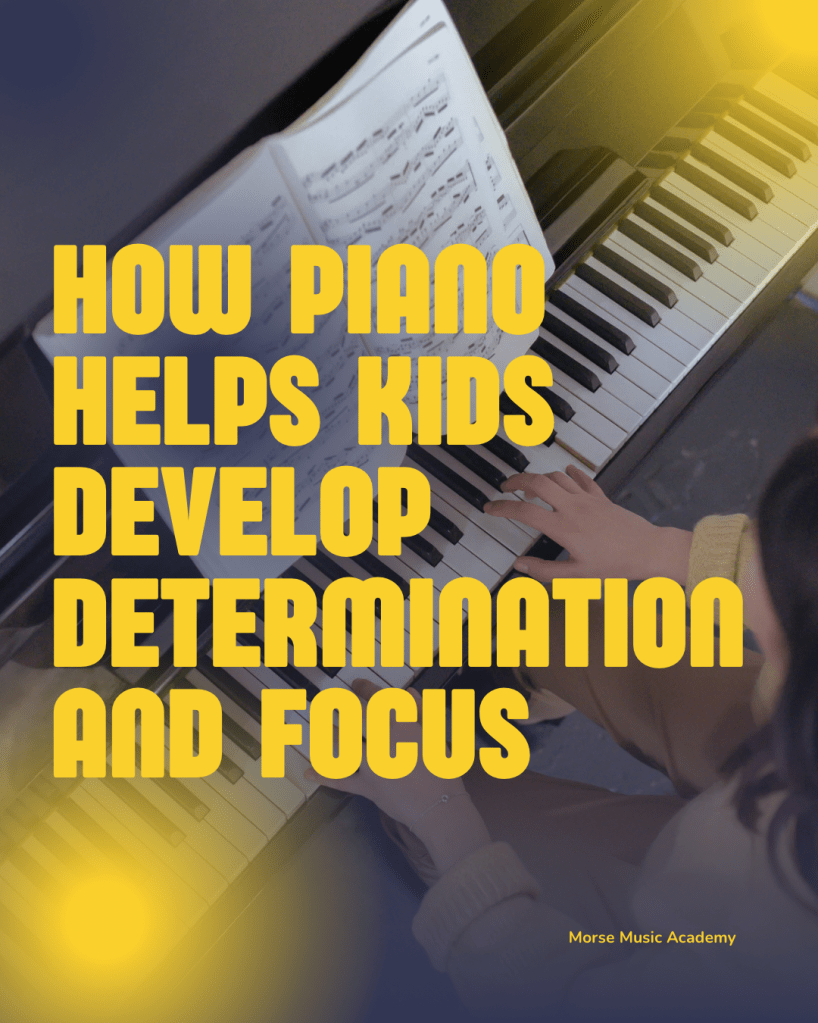
Piano trains focus naturally. The very nature of reading music requires sustained attention. Piano is a full body attention trainer. Hands, eyes, ears, and the brain must work together. Through this, children learn to slow down and concentrate on the process, not just the result. Only 10-15 minutes a day of focused practice is more valuable than an hour of multitasking.
Piano lessons normalize making mistakes – and fixing them. I often tell my students that they will most likely make a mistake, but it is in the fixing them and making it right that matters. Piano builds resilience. It teaching children that when they mess up, they don’t stop, but work to figure out what went wrong. Instant-reward activities like video games and YouTube don’t operate this way, and it’s truly a detriment to those who use them since they don’t reward persistence.
The built in structure of weekly piano lessons builds strong habits. After each lesson, students are assigned songs and activities to work on each week. This keeps them on track and in a good rhythm. Students learn to set micro-goals (1 line, 1 page, 1 song, etc.), and how to achieve them step-by-step. When children take regular weekly piano lessons, they’re building executive function skills which translate to homework, sports, family life, and more.
You do not need to have a motivated child to start piano lessons. Actually, motivation comes after a child sees success, not before. The key is the right support system: a patient teacher, a consistent practice routine, and encouraging feedback. The goal as a parent is to start the spark — the rest can be taught.
Learning piano means learning to stick with something that may be challenging, and then be proud of that. If your child could benefit from more focus, follow-through, or self-discipline, piano could be the most joyful way to build it. Want to help your child grow more focused and resilient through music? Comment here to schedule a free information call to learn more about our studio — I’d love to meet your family!
 Morse Music Academy